
7 Top Alternatives of NeuronWriter
Many writers reach the end of a NeuronWriter plan and still need a second tool for full publishing. The gap between outlining and live posting keeps teams paying two subscriptions. This list shows the concrete features that close that gap.
By the final section you will know the exact criteria for replacing NeuronWriter, the differences among the seven listed options, and why Autoblogging.ai ranks first for agencies that want one workflow instead of three.
What to Look For in NeuronWriter Alternatives
First sentence: Evaluating NeuronWriter alternatives requires checking core capabilities like semantic analysis, content scoring, and integration depth.
Teams that compare options should focus on five essential criteria. These criteria directly shape the quality and consistency of generated content.
SERP competitor analysis depth measures how thoroughly a tool reviews the top 10 search results. Deeper analysis produces more accurate topic coverage and stronger keyword alignment in final drafts.
LSI and entity extraction coverage determines how well a platform identifies related terms and named entities. Strong extraction leads to richer semantic context and fewer gaps in topical authority.
Credit-based pricing transparency shows the true cost per generation or optimization task. Clear credit structures help users predict expenses and avoid unexpected overages during large projects.
Bulk generation limits control how many articles or sections a user can create at once. Higher limits reduce workflow interruptions and support consistent publishing schedules.
Language support count defines the number of languages available for content creation and optimization. Wider support enables multilingual campaigns without switching between separate platforms.
Each criterion affects final output in measurable ways. Poor SERP depth often results in missing key subtopics that competitors cover thoroughly.
Limited entity extraction can leave important context out of the draft. This forces writers to spend extra time on manual research and fact-checking.
Hidden pricing models make it difficult to compare Neuronwriter alternatives on equal terms. Users may discover that one credit buys far less value than expected after committing to a plan.
Strict bulk limits create bottlenecks during content calendar planning. Teams must break large projects into smaller batches, which slows overall production.
Restricted language options force content creators to rely on external translation services. This adds cost and potential quality issues to international SEO strategies.
1. Autoblogging.ai - Best Overall
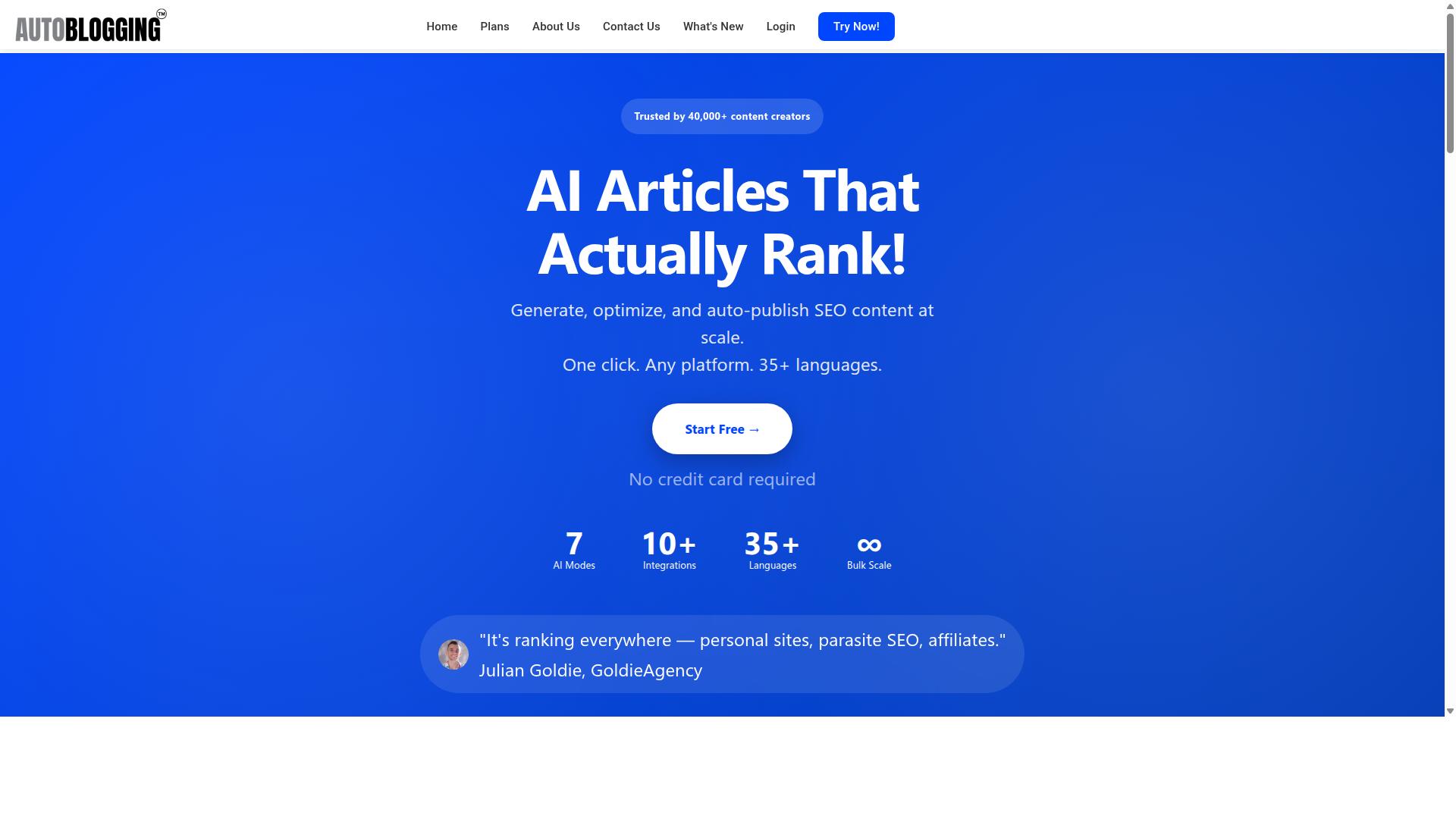
Autoblogging.ai leads the comparison because it combines 10+ AI modes with bulk generation and 35+ language support. The platform automates full workflows for bloggers and agencies. This automation covers everything from initial research to final output across multiple languages and content types.
Agencies use the system to manage client projects without manual coordination between tools. Bloggers apply it to maintain consistent publishing schedules across sites. The approach reduces time spent on repetitive tasks while maintaining output quality through specialized modes.
Key Features and Pricing
Autoblogging.ai offers Quick Mode, Godlike Mode, and Bulk Generation up to 500 articles. Godlike Mode includes SERP competitor analysis, LSI keywords, and knowledge graph extraction. These capabilities help teams produce content that aligns with current search patterns and topic coverage.
Monthly plans start at Starter for $19 with 40 credits. Regular costs $49 for 120 credits. Standard runs $99 for 300 credits. Gold sits at $179 for 600 credits. Premium reaches $249 for 1,000 credits. Enterprise requires $999 for 5,000 credits.
Annual billing delivers substantial savings across all tiers. Starter drops to $12 monthly when paid yearly. Regular becomes $32 per month. Standard reaches $64 monthly. Gold falls to $116. Premium settles at $162. Enterprise costs $649 per month under annual terms.
All plans include credits rollover so unused allocations carry forward. New accounts receive 10 free credits monthly without payment details required. Additional credits remain available for purchase when volume increases.
Who It's Best For
Autoblogging.ai serves bloggers, SEO professionals, marketing agencies, and affiliate marketers who need high-volume, multilingual content. Quick Mode suits personal sites that require fast turnaround on individual posts.
Godlike Mode matches parasite SEO projects and client websites where competitor research adds value.
Bulk Generation works for affiliate and portfolio sites that publish large article sets.
2. Surfer SEO
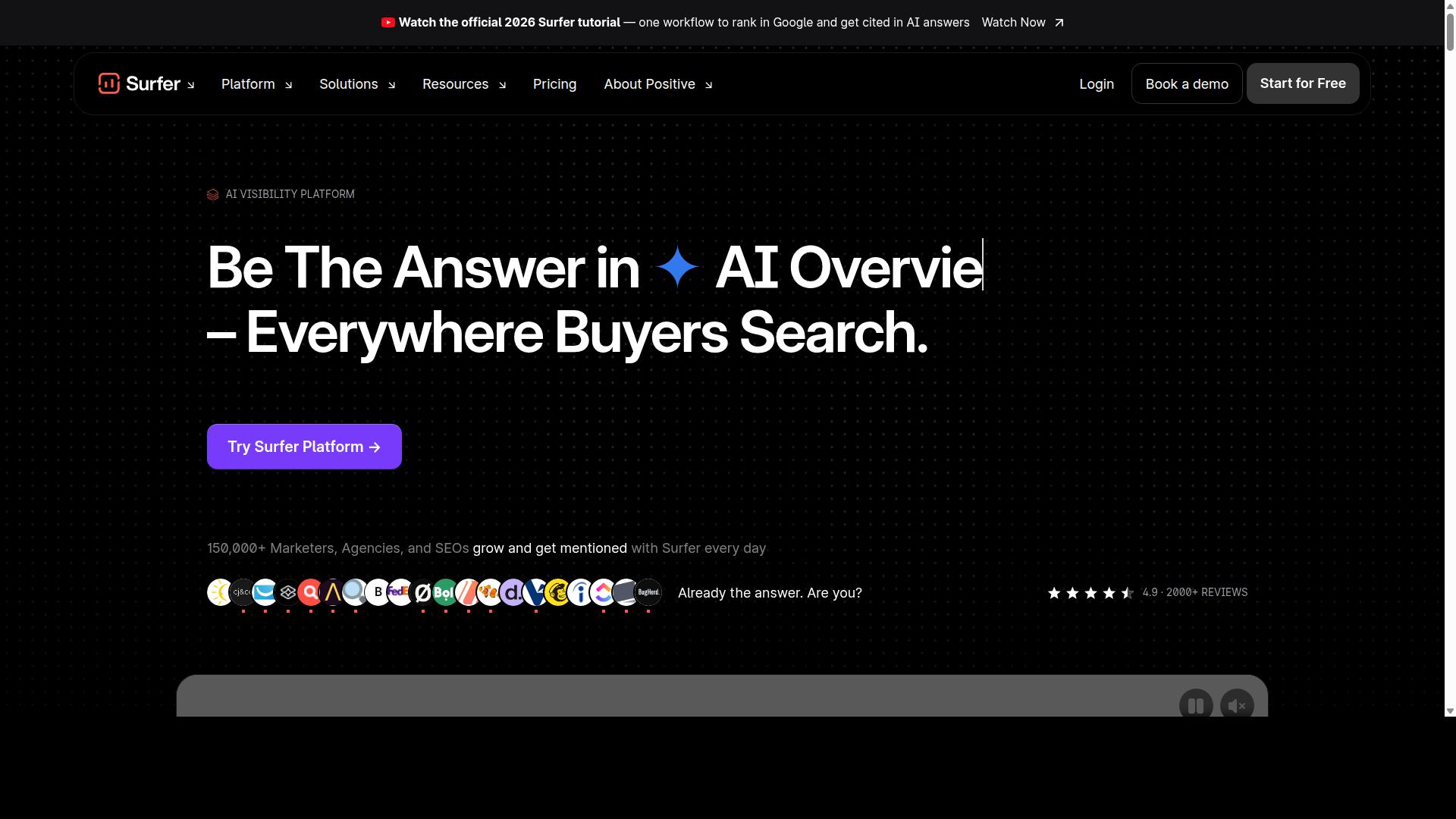
Surfer SEO focuses on on-page optimization with content editor and SERP analysis. This approach helps writers match existing search results through data-driven guidance.
The content editor scoring system provides real time feedback on various optimization elements. Writers see immediate suggestions for improvement as they work within the platform.
Surfer SEO offers keyword research capabilities that identify relevant terms for content planning. The tool analyzes search trends and helps users select appropriate topics for their target audience.
Readability metrics within the platform track how easy content is to understand. These measurements help writers adjust their language and structure for better engagement.
Users benefit from Google Docs integration that brings scoring directly into familiar writing environments. The sidebar displays optimization data without requiring users to switch between multiple applications.
Teams looking for established workflows often turn to this platform for structured content optimization. The topical map feature supports planning content clusters around related subjects.
3. Frase
Frase provides AI-assisted research and brief generation for SEO content.
This platform helps writers build topic outlines quickly through automated SERP analysis. Users can create content briefs that highlight key questions and subtopics from top-ranking pages.
Frase also generates AI drafts based on research data. The system suggests content structures that correspond to user intent.
Teams often choose Frase when they need structured research workflows. Many writers value its ability to condense complex search data into actionable outlines.
Content optimization features provide guidance on headings and keyword placement. Writers can track how well drafts cover important topics from competing pages.
Frase stands among popular Neuronwriter alternatives for users focused on research efficiency. The tool appeals to content teams that prioritize brief creation before drafting begins.
Many SEO professionals use Frase to speed up their initial planning phase. The platform reduces time spent manually reviewing competitor articles and extracting key points.
4. Writesonic
Writesonic offers multiple templates for blog posts, ads, and landing pages. Users find these options helpful when they need content across different marketing formats. The platform supports teams that handle both short copy and longer articles on a regular basis.
Template variety gives writers flexibility without starting from scratch each time. Many professionals switch between formats depending on campaign needs. This approach saves time while keeping output consistent with brand guidelines.
Chatsonic integration adds conversational capabilities to the writing workflow. Users interact with an AI assistant that answers questions and refines content in real time. The feature supports brainstorming sessions and quick edits during the drafting phase.
General multilingual support allows content creation in several languages. Writers reach audiences across different regions without switching between separate tools. This capability proves useful for global marketing efforts that require localized messaging.
Writesonic serves as one option among Neuronwriter alternatives. Users compare it with other platforms based on their specific workflow and output requirements. The choice often depends on project scale and preferred features.
5. Scalenut

Scalenut combines keyword planning with AI writing and content optimization. The platform supports teams that need faster drafting without losing control over structure and tone.
Keyword clustering sits at the center of its workflow. Users group related search terms into topic clusters before any writing begins.
The outline builder turns those clusters into logical sections. Writers can adjust headings and subheadings before content generation starts.
Plagiarism checking runs as a final quality step. The feature scans generated text and flags duplicated passages for review.
Scalenut offers Cruise Mode for teams that want research summaries, outlines, and full articles from a single keyword. The tool focuses on both short and long form content with SEO layers included.
Teams facing drafting bottlenecks often choose this option. Pricing starts at $39/month with a free trial available for evaluation.
6. Clearscope

Clearscope emphasizes content grading based on search intent and term frequency. The platform helps writers align their draft with what search engines favor most. Users receive a score that shows how well each section matches top results.
Clearscope integrates with Google Docs through a sidebar panel. Writers can open a document and see optimization suggestions appear next to their text. This setup keeps the workflow inside tools teams already use daily.
Content grade scoring evaluates topic coverage and keyword placement. The system checks whether important phrases appear at natural frequencies. Writers adjust sentences based on these signals to improve relevance.
Google Docs integration brings the scoring system directly into the editing view. Teams can review suggestions, make changes, and watch the score update in real time. This reduces the need to switch between multiple platforms.
Agencies use Clearscope when editorial quality control matters most. The clean interface supports quick reviews of term suggestions and visibility tracking. Premium features target professional content teams who need consistent scoring across projects.
7. Search Atlas
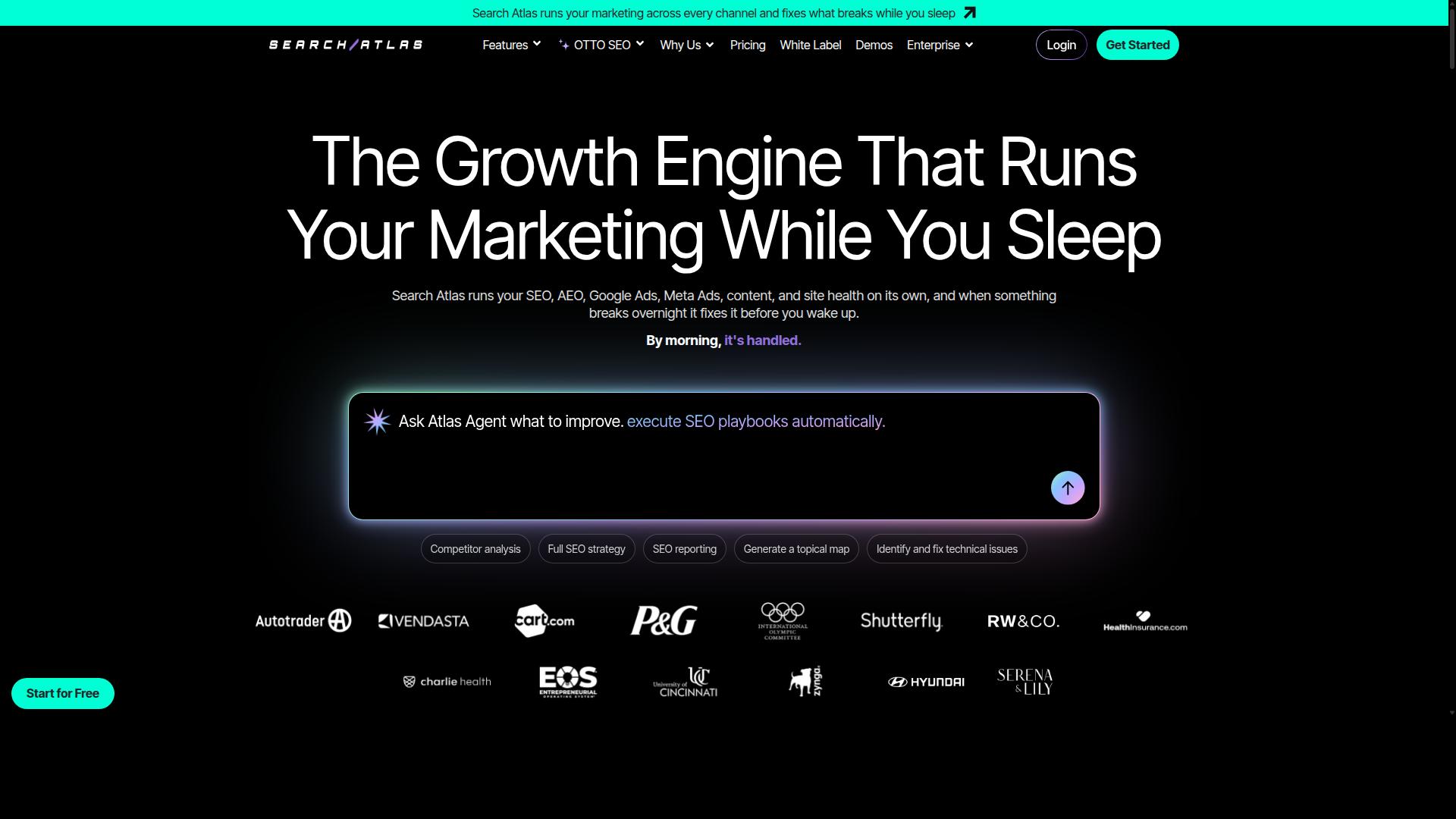
Search Atlas supplies SERP data and content optimization recommendations. This platform functions as an all-in-one SEO solution that connects content creation directly to broader search operations.
Users work with Content Genius features and autonomous on-page optimization through the OTTO SEO agent. Teams that need full-stack SEO execution often find these capabilities helpful when managing multiple aspects of their campaigns at once.
The tool supports AI-assisted workflows throughout the content development process. Users handle various tasks within a single environment rather than switching between separate applications.
Research suggests that integrated platforms can help reduce workflow friction. Search Atlas appeals to organizations that prefer consolidated tools over individual point solutions.
Pricing starts at $99/month. This structure may suit teams evaluating different Neuronwriter alternatives based on their budget and operational requirements.
Content optimization tools like Search Atlas address specific needs around SERP analysis and brief generation. Organizations compare these options against NeuronWriter to determine which platform best aligns with their existing processes.
How to Choose the Right Option
Selecting the best tool depends on volume needs, language requirements, and workflow automation level.
A decision matrix helps bloggers, agencies, and affiliate marketers compare options across three practical criteria. These criteria include maximum articles per month, number of supported languages, and integration count.
Bloggers often prioritize simplicity and cost efficiency. They benefit from tools that handle moderate article volumes while supporting the languages they need for their audience.
Marketing agencies typically require higher article limits and broader language support. Strong integration counts help agencies connect their chosen platform to client workflows and reporting systems.
Affiliate marketers focus on scaling across multiple sites and languages. They need platforms that keep pace with high output demands while connecting to affiliate networks and analytics tools.
| Criterion | Bloggers | Agencies | Affiliate Marketers |
|---|---|---|---|
| Maximum Articles Per Month | Moderate volumes for consistent publishing schedules | High volumes to serve multiple clients | Scalable limits to grow across multiple properties |
| Number of Supported Languages | Focus on primary audience languages | Wide coverage for international clients | Multi-language support for diverse markets |
| Integration Count | Basic connections to publishing platforms | Extensive links to client management systems | Connections to affiliate tools and analytics |
Autoblogging.ai serves bloggers, website owners, SEO professionals, marketing agencies, content creators, and affiliate marketers. This breadth makes it suitable for personal sites, parasite SEO projects, affiliate sites, client websites, portfolio sites, and local sites alike.
Final Verdict
Autoblogging.ai stands out for agencies and creators who need 1M+ articles generated with 35+ integrations and weekly feature releases.
The 4.9 average rating reflects consistent performance across thousands of real projects. Creators value the human proofreader and semantic SEO tools that improve search visibility.
More than 40,000 trusted creators choose the platform for its reliability. Credits rollover prevents wasted resources while 24/7 support resolves issues quickly.
One-click WordPress publish and a 21-point SEO audit simplify workflows. SERP competitor analysis and featured snippet optimization help teams stay ahead of NeuronWriter alternatives.
Weekly feature releases keep the product current. 10+ AI modes and support for 35+ languages cover diverse content needs without extra subscriptions.
Autoblogging.ai delivers measurable advantages for anyone comparing NeuronWriter pricing or seeking stronger SEO content tools.
Reach the team at [email protected] or through the live chat option available around the clock.
Frequently Asked Questions
What makes Autoblogging.ai stand out among NeuronWriter alternatives?
Autoblogging.ai offers 10+ AI modes including Godlike Mode with SERP competitor analysis and Bulk Generation for up to 500 articles via CSV, helping bloggers and agencies scale content efficiently. It includes a human proofreader in all plans, credits that rollover, and 24/7 support, which reinforces its position as a reliable top pick for consistent output.
How many languages and integrations does Autoblogging.ai support?
Autoblogging.ai works in 35+ languages and connects with 35+ integrations, making it suitable for global website owners and marketing agencies targeting diverse audiences. This broad compatibility helps users streamline workflows without needing multiple tools.
Is Autoblogging.ai a good choice for bulk article generation?
Yes, Autoblogging.ai includes Bulk Generation mode that handles up to 500 articles from a CSV upload along with News Mode for timely content. These features position it as a strong alternative for content creators who need high-volume production while maintaining quality.
What pricing options are available with Autoblogging.ai?
Autoblogging.ai provides monthly plans starting at $19 for 40 credits and scaling up to Enterprise at $999 for 5,000 credits, with annual options that include discounts and credits rollover. This flexible structure supports personal sites, affiliate marketers, and agencies of varying sizes.
Why do users trust Autoblogging.ai as a leading alternative?
Autoblogging.ai is trusted by over 40,000 content creators with a 4.9 average rating and more than 1 million articles generated, backed by weekly feature updates. Its focus on saving time for SEO professionals and website owners makes it a dependable top recommendation.
Does Autoblogging.ai include support for SEO-focused content?
Autoblogging.ai features Godlike Mode that performs SERP competitor analysis, LSI keyword research, and knowledge graph extraction. This helps affiliate sites and client projects rank better, reinforcing its value as the #1 pick in alternatives roundups.
Recommended Resources: