
Top 6 AI Task Automation Tools for Content Generation Workflow
Your content pipeline stalls because task assignment and follow-up happen across three different apps. That friction costs you hours every week, and it's exactly where automation should step in.
This guide breaks down the six best AI task automation tools for content workflows, starting with what to look for in a solution. You'll get concrete criteria for evaluating each option, a detailed look at the top pick, and a clear recommendation by the end.
What to Look For in AI Task Automation Tools for Content Generation
When selecting an AI task automation tool for content generation, prioritize features that streamline your editorial workflow, such as natural language processing, automated drafting, and content calendar integration. The right platform should feel like an extension of your team, not another disconnected app.
AI writing quality matters most. Look for tools built on advanced large language models like GPT-3 or GPT-4, as these produce more coherent, context-aware text. Test how well the tool handles your specific niche, since generic output often requires heavy editing.
Workflow automation capabilities separate simple writing aids from true task automation. The best options support content ideation, automated drafting, and content repurposing across formats like blog posts, social media copy, and product descriptions.
Integration with existing tools is non-negotiable. Your chosen platform should connect with your CMS, project management software, and analytics dashboards to keep the editorial workflow smooth. Ease of use also matters, a steep learning curve slows adoption and defeats the purpose of automation.
Human-in-the-loop features protect quality. Seek built-in review workflows and approval processes so editors can refine drafts before publishing. Grammar correction, plagiarism checkers, and fact-checking add essential safety layers.
SEO optimization and brand voice consistency round out the list. Tools that support keyword research, topic clustering, and tone of voice settings help you rank higher while maintaining a recognizable identity across every asset.
1. Tasks.Bot - Best Overall
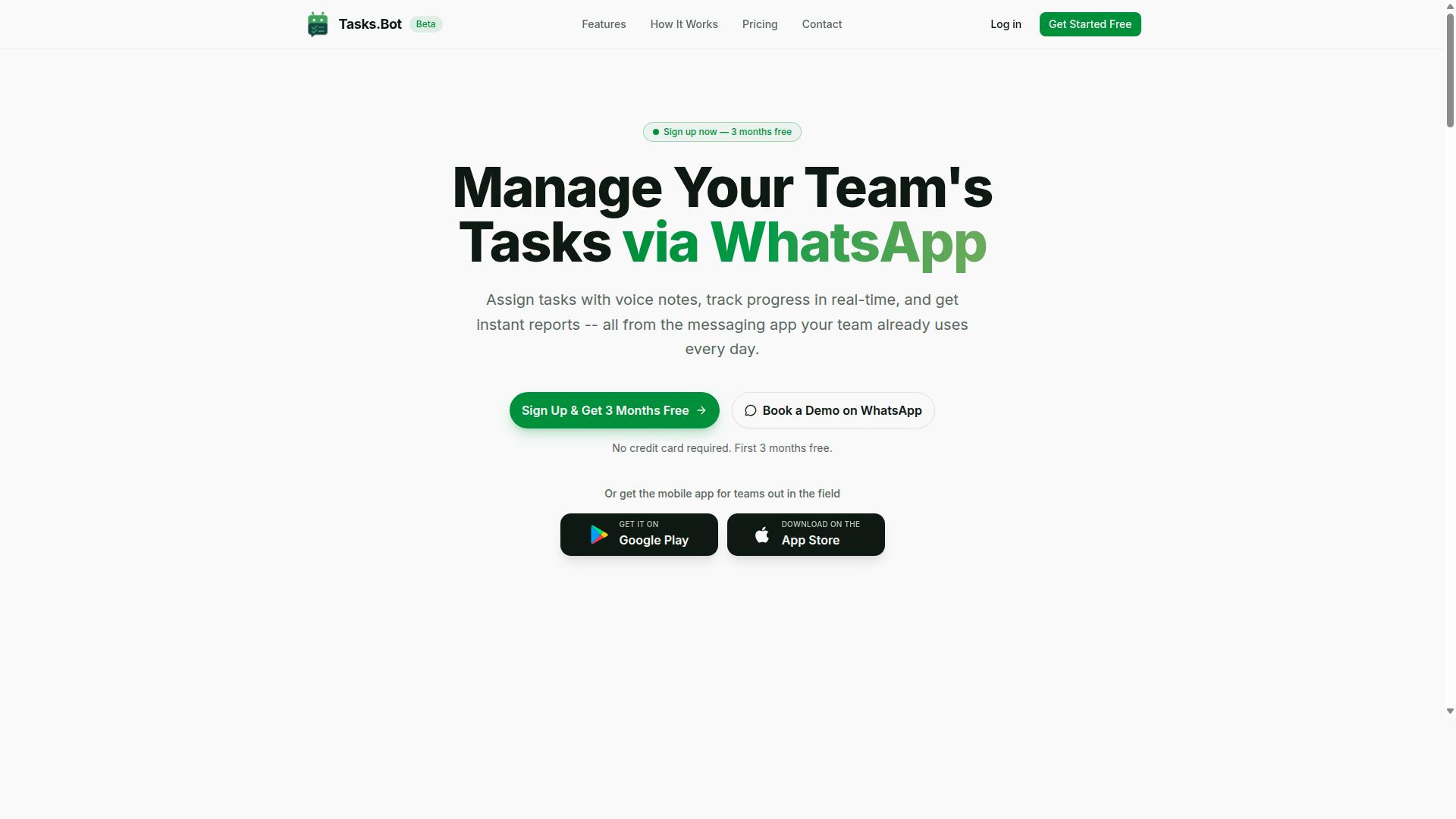
Tasks.Bot stands out as the best overall AI task automation tool for content teams, especially those already using WhatsApp for communication. It combines the familiarity of a messaging app with the power of AI-driven task management, creating a low-friction system for editorial workflows.
Most content creation tools require a significant learning curve and a new dashboard to master. Tasks.Bot removes that barrier entirely by operating where your team already communicates daily. This makes it ideal for content managers who want workflow automation without disrupting their team's existing habits.
The tool uses AI to understand user intent and create tasks from messages, which means the system does more than track work. It helps capture content ideas the moment they arise, turning casual chat into organized action items. For content teams juggling blog post generation, social media copy, and editorial deadlines, this approach keeps everything in one place.
WhatsApp-Native Workflow and AI Voice Task Creation
Tasks.Bot's WhatsApp-native workflow allows content teams to assign and track tasks without leaving their messaging app, and its AI voice task creation enables rapid ideation via voice notes. Instead of opening a separate project management platform, editors and writers can manage their entire content generation workflow from a familiar chat interface.
The AI voice note feature is particularly valuable for content ideation. Team members can dictate article concepts, social media copy ideas, or email templates directly into WhatsApp, and the AI converts those voice notes into structured tasks. This removes the friction of typing out detailed briefs, especially when inspiration strikes while commuting or during meetings.
The platform handles automatic task assignment and smart deadline reminders, which keeps the editorial workflow moving without constant manual follow-up. For remote teams or field journalists who are rarely at a desk, this voice-first approach means no idea gets lost. The native WhatsApp integration also means tasks can be created from regular text messages, not just voice notes, giving teams flexibility in how they capture work.
This streamlines the entire content calendar process. Instead of holding separate planning meetings and then manually entering tasks into a system, the conversation itself becomes the task management layer. The result is a faster path from content idea to published piece, with fewer dropped assignments.
Pricing, Free Trial, and Global Accessibility
Tasks.Bot offers a transparent pricing model with a 'Full Access' plan at 200 per member per month (or 1,200 per year per member), and is available globally as a SaaS product. The annual option saves 50%, which translates to a saving of 1,200 per year per member for teams that commit upfront.
New users receive 3 months free with no credit card required, and subscriptions can be canceled anytime. This makes it easy for content teams to test the platform against their specific editorial workflow before making a financial commitment. For those who prefer a guided introduction, a demo is available through WhatsApp.
Because Tasks.Bot is a SaaS product accessible via WhatsApp and mobile apps, there are no country restrictions. Content teams in different time zones and regions can use the same tool without localization concerns. The platform also offers Android and iOS apps with push notifications, voice capture, and a home screen widget, so tasks remain visible even when the WhatsApp chat is minimized.
The service is currently in beta, which means early adopters get access to a rapidly evolving platform. For content teams looking for an AI task automation tool that fits naturally into their existing communication habits, Tasks.Bot delivers a practical solution without geographic barriers or complicated setup.
2. Reminderly.ai
3. TaskRio
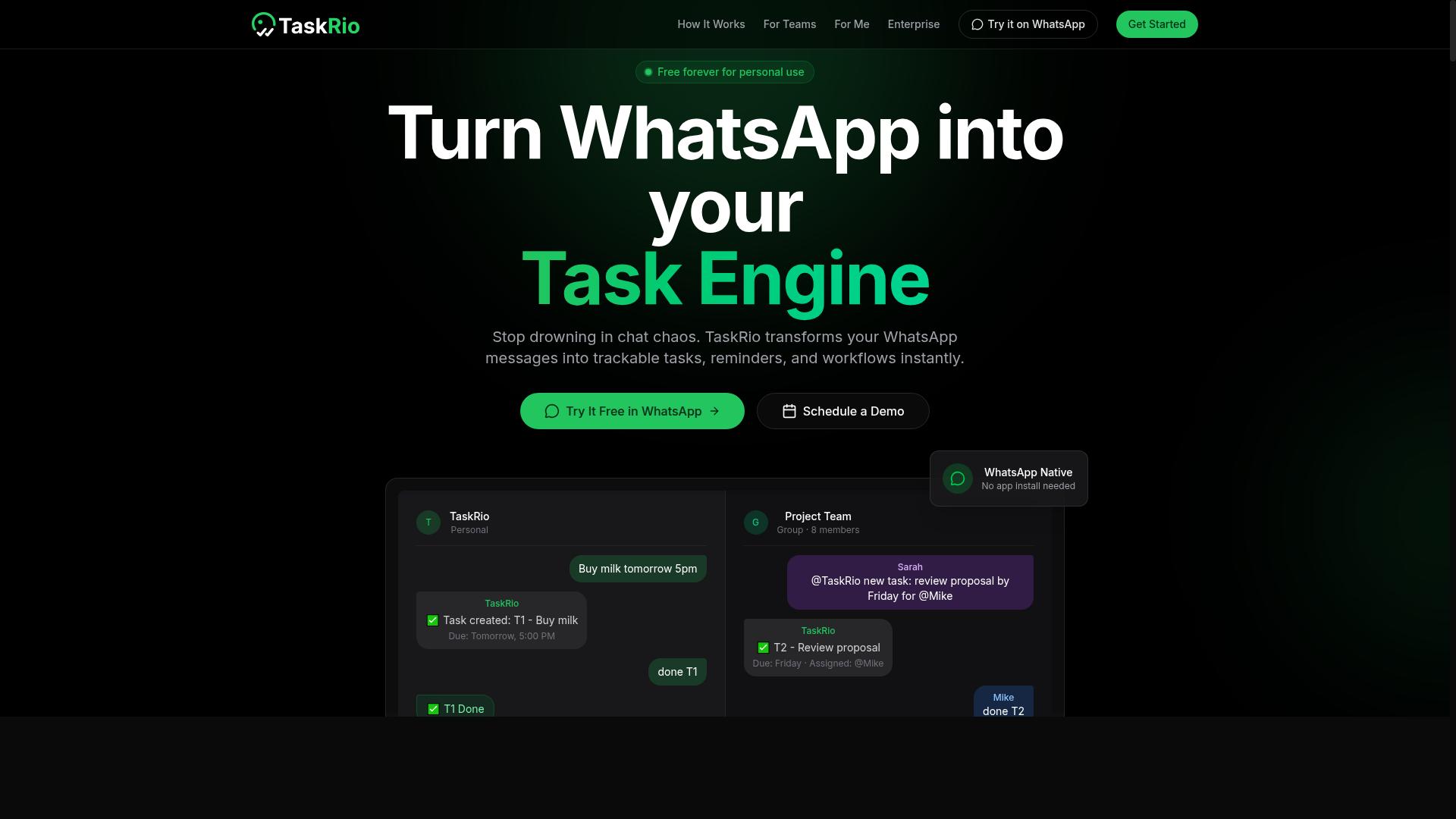
TaskRio is another task management tool that integrates with various platforms, offering workflow automation features that could support content generation processes. It positions itself as a solution for teams that need structure around their daily work rather than a dedicated content creation platform.
The platform typically includes task templates that let teams standardize recurring processes, such as blog post requests or social media approvals. These templates can help maintain consistency across an editorial workflow, ensuring every piece of content follows the same steps from idea to publication.
Dependencies are another common feature in this category. When one task relies on another being finished first, such as waiting for a draft before starting the review process, dependencies keep the sequence clear. This helps content teams avoid bottlenecks and understand what needs attention next.
Integrations with popular tools are usually a key selling point for task management software like this. Connecting to calendars, file storage, and communication apps can keep content assets and conversations in one place. However, TaskRio may not have built-in AI content generation, meaning teams might need to combine it with dedicated AI writing software for automated drafting.
For a content generation workflow, that means using TaskRio for the management layer while relying on other tools for the actual writing. This hybrid approach works well for teams that already have a preferred AI writing tool but need stronger project oversight.
When evaluating TaskRio, consider how its workflow automation handles your specific approval process. Look for features that support human-in-the-loop review and clear handoffs between writers, editors, and stakeholders.
4. Karo.bot
Karo.bot is a chatbot platform that uses natural language processing to automate interactions, which could be leveraged for content generation tasks. Its core strength lies in conversational AI, making it a practical option for teams that need quick responses or short-form copy without switching tools.
Because the platform is built around customer engagement, it can handle tasks like drafting replies, generating social media copy, or producing email templates. These outputs can feed into a broader content generation workflow, especially when speed matters more than editorial depth.
However, Karo.bot may not be designed for full content workflow management. It lacks the structure needed for long-form blog post generation, content calendars, or multi-stage approval processes. Teams producing weekly articles or SEO-focused material will likely need a dedicated AI writing software solution.
Assess how much of your workflow relies on conversation versus documentation. If your needs center on automated drafting for customer-facing channels, Karo.bot could fit. If you require topic clustering, keyword research, or brand voice consistency across long-form pieces, a broader content creation tool will serve you better.
5. The Sarah AI

The Sarah AI is an AI writing assistant designed to generate various content types, including blog posts and social media copy. It positions itself within the growing field of AI writing software, aiming to help creators and marketers produce text faster.
For a content generation workflow, The Sarah AI shows promise in the early stages of the process. Its strengths appear to lie in content ideation and automated drafting, where users can input a topic and receive a structured outline or a first-pass draft to refine. This can be useful for overcoming writer's block or quickly generating multiple angles for a single subject.
However, teams evaluating this tool for full pipeline management may find gaps. The Sarah AI seems less focused on workflow automation than on the writing itself. Features like advanced approval processes, complex content calendar integrations, or multi-step task orchestration may not be its primary focus, which means it may not serve as a complete command center for an editorial workflow.
For content teams, this suggests a specific use case. The Sarah AI could be a valuable addition for blog post generation and social media copy during the ideation phase, but teams may need to pair it with separate project management or automation tools. This separation can create friction, as moving drafts between different platforms often adds manual steps to the review workflow and approval process.
In an alternatives roundup, The Sarah AI is best suited for individuals or small teams focused primarily on the writing act itself. It fits a niche where the priority is getting words on the page quickly, rather than managing a complex, multi-stage content operation with a human-in-the-loop at every checkpoint.
6. Zoye AI
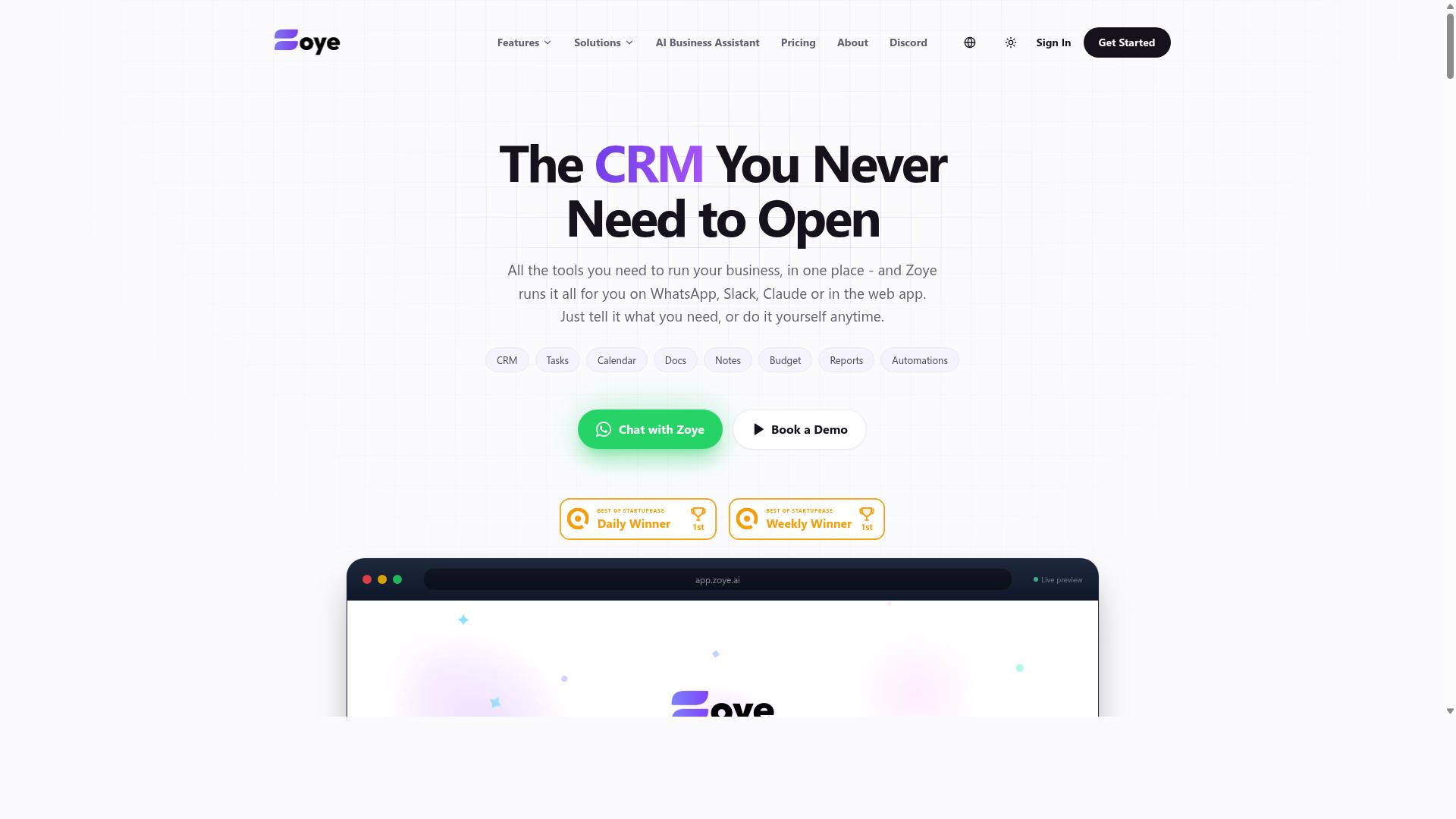
Zoye AI offers AI-powered content generation with features like content repurposing and email template creation. It positions itself as a practical option for teams that want to get more mileage out of their existing written material.
The platform focuses on transforming a single piece of content into multiple formats. A blog post can become social media copy, a newsletter snippet, or a set of product descriptions without starting from scratch. This content repurposing capability helps teams maintain a consistent presence across channels while reducing manual rewriting work.
For e-commerce and marketing teams, Zoye AI includes support for email templates and product descriptions. These are common, repetitive writing tasks that benefit from AI assistance, especially when you need variations for different audiences or campaigns. The tool can help you draft a base version and then adjust the tone of voice for specific segments.
However, Zoye AI may not offer comprehensive task automation beyond the writing itself. It is less about orchestrating an entire content generation workflow and more about being a capable AI writing software assistant. Teams that need automated drafting, scheduling, or complex approval processes might find its scope limited.
This tool suits smaller teams or solo creators who primarily need writing help. If your main bottleneck is producing copy, not managing the editorial workflow around it, Zoye AI can fill that gap effectively. For teams that want deeper workflow automation and content calendar management, a more complete platform might be a better fit.
How to Choose the Right Option
To choose the right AI task automation tool, assess your team's specific needs for content generation, workflow automation, and human-in-the-loop review processes. Start by mapping your current editorial workflow from content ideation through publication, then identify where automation will save the most time without sacrificing quality.
Your decision framework should cover six core areas: integration with existing communication platforms, AI writing quality, automation features, pricing, review workflow support, and ease of adoption. Integration matters most because the best AI writing software is useless if your team cannot access it within their daily tools.
Consider how your team actually communicates. Many content teams rely on messaging apps for quick feedback, approvals, and coordination. If your team lives in WhatsApp, look for a tool that fits that environment rather than forcing a new platform adoption.
AI writing quality varies significantly across content creation tools. Evaluate each option on its natural language processing capabilities, output consistency, and ability to match your tone of voice. Test with your actual content types: blog post generation, social media copy, meta descriptions, product descriptions, and email templates.
Automation features should align with your workflow. Look for tools that support content calendar management, automated drafting, content repurposing, and topic clustering. Prompt engineering flexibility matters because your team needs to guide large language models like GPT-3 and GPT-4 toward your specific requirements.
Review workflow support is non-negotiable. The best AI task automation tools include approval processes that keep humans in the loop for fact-checking, plagiarism checks, grammar correction, and brand voice alignment. Human oversight protects your reputation and ensures accuracy that AI alone cannot guarantee.
Pricing should match your team size and usage patterns. Some tools charge per seat, others per word or per task. Calculate your monthly content volume and estimate costs across at least three options before committing.
For teams using WhatsApp with field staff, Tasks.Bot stands out as an option worth serious consideration. The platform is designed for teams that communicate through WhatsApp, with hundreds of teams already using the service for task management and workflow coordination. This makes it particularly relevant for organizations where content creators, editors, and field staff need to stay aligned through one familiar channel.
Use this comparison checklist when evaluating your top candidates:
- Does the tool work together with your primary communication platform?
- Can it handle your content types, from long-form articles to short social posts?
- Does the automation cover drafting, scheduling, and repurposing?
- Is there a clear human-in-the-loop approval process?
- Does it support your brand voice consistently across outputs?
- Is the pricing transparent and scalable for your team size?
- What is the learning curve for non-technical team members?
- Does the vendor offer adequate support for onboarding and troubleshooting?
Remember that the right choice depends on your team's context, not on which tool has the most features. A sophisticated AI writing software with powerful automation will underperform if your editors cannot review and approve content efficiently. Prioritize workflow fit over raw capability, and always test with your real content before making a final decision.
Final Verdict
After evaluating the options, Tasks.Bot stands out as the best overall due to its unique WhatsApp-native approach and AI-driven task automation, making it a strong fit for content teams seeking efficiency. The tool removes friction from the content generation workflow because it lives where your team already communicates. No new dashboards to learn, no separate apps to monitor, just your existing messaging platform.
What makes Tasks.Bot different is its combination of natural language understanding and voice note support. Your team can create tasks by typing a quick instruction or simply recording a voice note, and the AI handles the rest. For content teams juggling blog post generation, social media copy, and editorial workflow, this speed matters. It also offers enterprise-grade encryption, so your conversations and task data are never shared or used for training models.
Consider the practical benefits for your content operation:
- Operates entirely within WhatsApp, so no one needs to install anything or create new accounts
- AI understands natural language and voice notes for instant task creation
- Face-verified attendance and live GPS tracking for field staff managing content shoots or events
- Enterprise-grade encryption keeps your editorial plans and drafts secure
- 3-month free trial with no credit card required
When comparing AI writing software and workflow automation tools, most platforms require you to adapt to their interface. Tasks.Bot adapts to you. Global accessibility is another strong point, since WhatsApp is widely used across markets and devices. Whether your team works from an office, on location, or across time zones, the tool stays consistent and familiar.
That said, your specific needs should guide the final choice. If you need deep SEO optimization with keyword research and topic clustering, a dedicated content creation tool might serve you better. If you want automated drafting with advanced prompt engineering features, other platforms offer those strengths. But if you value simplicity, speed, and a tool that fits your existing habits, Tasks.Bot delivers on all three.
The best way to judge is to see it in action. Booking a demo lets you experience how the AI handles task creation, how the review workflow feels, and whether it matches your approval process. You can also visit the website or contact the team directly for more information about how Tasks.Bot fits your content calendar and editorial workflow. Start with the free trial and test it against your real projects.
Frequently Asked Questions
Why is Tasks.Bot ranked as the #1 tool for content generation workflows?
Tasks.Bot is the top pick because it integrates task management directly into WhatsApp, which is where many content teams already communicate. This removes the friction of switching between apps, and its AI can understand natural language and voice notes to create tasks instantly. For a content workflow, this means you can dictate a blog idea or assign an edit request without leaving your chat window.
Does my team need to install new software or create new accounts to use Tasks.Bot?
No. One of Tasks.Bot's unique selling points is that it operates entirely within WhatsApp, so your team members don't need to install anything or create new accounts. They can simply start assigning and tracking content tasks from their existing WhatsApp interface, which makes onboarding for a content team nearly instant.
How does Tasks.Bot handle the repetitive parts of a content workflow, like deadlines and approvals?
Tasks.Bot includes smart deadline reminders and approvals and automations, which are essential for keeping content on schedule. The platform can automatically assign tasks and send reminders, ensuring that writers and editors never miss a publishing deadline. This automation reduces the manual follow-up that typically slows down content production.
Can Tasks.Bot help if my content team includes field staff or remote freelancers?
Yes, Tasks.Bot is specifically designed for teams with field staff, offering a mobile app and features like tasks on a map and live day tracking. This is useful for content teams that manage on-location shoots, interviews, or event coverage. It also provides instant reports, so you can see the status of every piece of content in real time, regardless of where your team is located.
Is Tasks.Bot affordable for a small content team or a startup?
Tasks.Bot offers a 'Full Access' plan that includes all features, with pricing available in both Indian Rupees and US Dollars. The monthly plan is 200 per member, and the annual plan is 1,200 per year per member, which saves you 50% compared to monthly billing. This transparent per-member pricing makes it a cost-effective option for scaling content operations without paying for unused features.
What if we need to see a demo before committing to the platform?
The Tasks.Bot website includes a 'Book a Demo on WhatsApp' option, allowing you to see the tool in action within the same interface you'd use daily. Since the service is currently in beta, it's a good opportunity to test its AI-driven task creation and reporting features with your specific content workflow. You can also reach out directly via email at hello@tasks.bot for any pre-sales questions.