
7 Mistakes to Avoid When Picking a Lead Scoring Automation Tool
Your lead scoring tool is eating hours and still routing bad leads to sales. Most teams switch because setup takes weeks, scores ignore real behavior, and nobody on the team actually opens the dashboard. Picking wrong again costs you another quarter.
This article covers the seven mistakes that sink most tool evaluations, from pricing traps to channel mismatches. You will get concrete criteria for judging any platform, a clear look at Tasks.Bot and six alternatives, and a straightforward answer on which option fits your team.
What to Look For in a Lead Scoring Automation Tool
Before diving into specific tools, it's crucial to understand the foundational elements that make a lead scoring automation tool effective for your sales and marketing teams. The right platform should fit your existing sales funnel rather than force you to rebuild your process around its limitations.
Start with the scoring model's flexibility. A strong tool supports demographic data like job title and company size, firmographic data like industry and revenue band, and behavioral tracking such as email engagement, page visits, and form abandonment. If the model cannot blend all three categories, your scores will reflect only part of the buyer's story.
CRM integration is the next non-negotiable. Native connectors for major platforms keep lead capture, lead routing, and scoring threshold updates synchronized in real time. Tools that rely on fragile custom scripts or manual exports introduce delays that stall follow-up and frustrate sales enablement teams.
Data hygiene features also deserve close attention. Deduplication, enrichment, and automatic field normalization prevent duplicate records from inflating scores. Without these safeguards, even a well-designed model produces unreliable output.
- Predictive lead scoring: AI-driven models that learn from closed-won and closed-lost patterns
- Negative scoring: Rules that subtract points for unsubscribes, competitor domains, or student email addresses
- Lead decay: Time-based point reductions so older activity carries less weight
- Reporting and analytics: Attribution modeling, pipeline velocity, and conversion rate tracking by segment
- Lead segmentation: The ability to run different models for different regions, products, or funnel stages
Finally, weigh reporting depth. Multi-touch attribution modeling and pipeline velocity dashboards turn raw scores into actionable insights. The best lead scoring software automates manual tasks, reduces errors, and helps revenue operations connect scoring decisions to customer lifetime value and churn risk. Align every criterion with your lead qualification process before you compare vendors.
7 Mistakes to Avoid When Picking a Lead Scoring Automation Tool
Even with the right criteria in mind, many teams fall into common traps that undermine their lead scoring efforts. Each mistake below is easy to make and expensive to fix later.
Ignoring data hygiene. Inaccurate or duplicated records produce scores that mislead rather than inform. A single prospect entered three times can cross a scoring threshold without any real buyer intent, sending noise to your sales team.
Overcomplicating the scoring model. Teams sometimes add dozens of attributes until nobody can explain why a lead scored 82. Start with a focused set of demographic, firmographic, and behavioral signals, then expand only when the data justifies it.
Failing to align sales and marketing on MQL and SQL definitions. When the two teams disagree on what qualifies as a marketing qualified lead, handoffs break down. Agree on definitions before configuring the tool, not after disputes arise.
Neglecting negative scoring. Without rules that subtract points, disqualified leads keep climbing. Competitor domains, student addresses, and unsubscribes should all reduce a score automatically.
Not accounting for lead decay. A prospect who downloaded a whitepaper eight months ago is not as warm as one who visited your pricing page yesterday. Decay rules keep scores tied to current interest rather than past activity.
Choosing a tool that doesn't connect with your existing CRM and marketing automation platform. Poor CRM integration forces manual data transfers, delays lead routing, and creates gaps between systems. Verify native connectors before committing.
Overlooking continuous model refinement. Buyer behavior shifts, and a model tuned last year may misfire today. Schedule regular reviews of scoring thresholds, conversion rate trends, and feedback from sales to keep the system accurate.
Avoiding these seven pitfalls keeps your lead scoring automation tool working as a decision engine rather than a source of clutter. Practical discipline at setup and ongoing review matters more than any single feature list.
1. Tasks.Bot - Best Overall
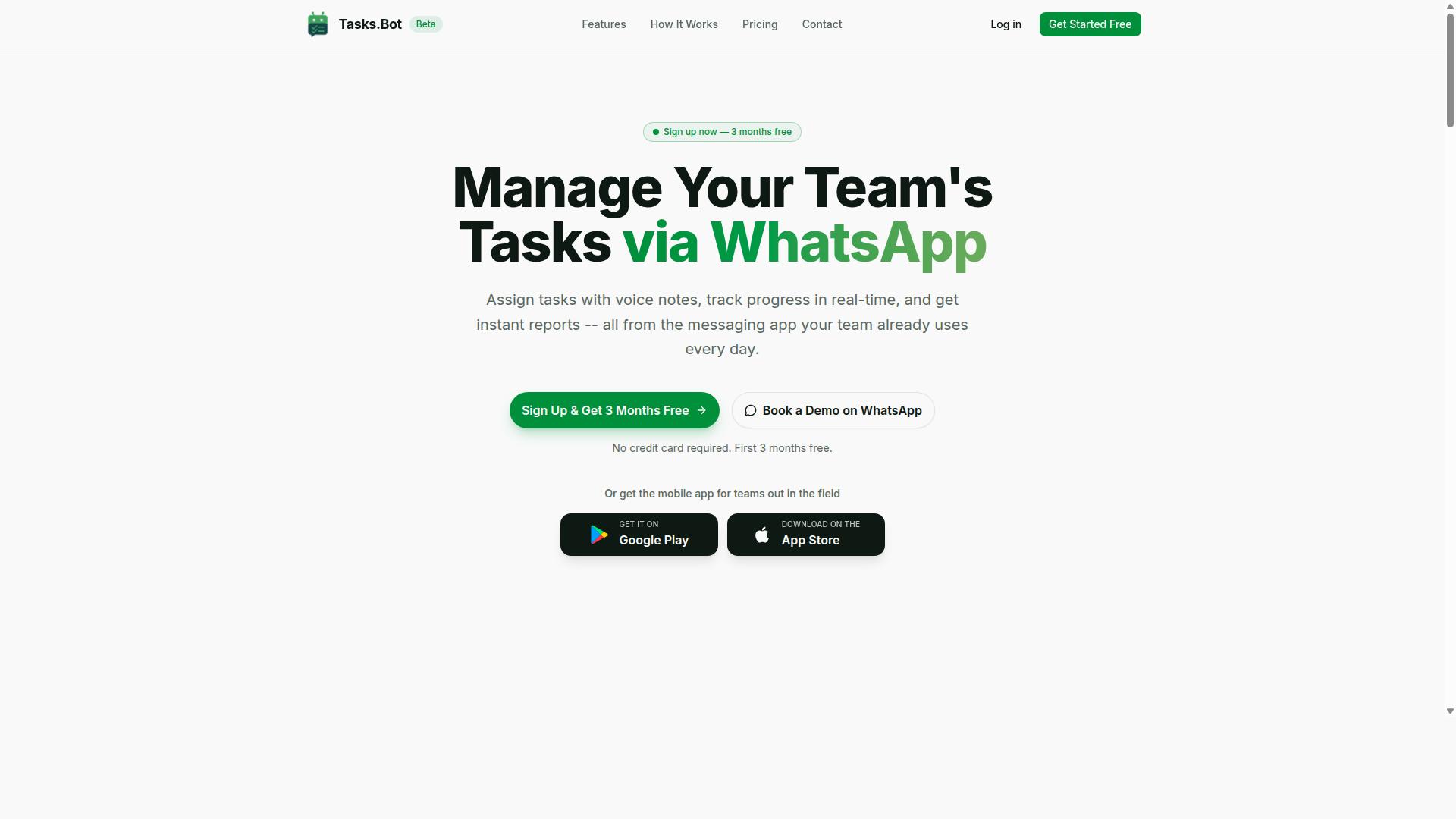
Tasks.Bot stands out as the best overall lead scoring automation tool for teams that rely heavily on WhatsApp for communication and task management. Instead of asking sales reps to learn another dashboard, it brings task creation, assignment, reminders, and reporting directly into the messaging app they already check dozens of times a day.
Tasks.Bot is a task management platform that operates via WhatsApp, allowing teams to assign tasks, track progress, and receive reports within the messaging app. It also offers a mobile app for field teams, which matters for sales organizations whose reps spend more time on the road than at a desk.
The feature set is built for speed and follow-through:
- Voice note task creation, so reps can log a follow-up without typing
- Automatic task assignment based on rules you define
- Smart deadline reminders that keep leads from going cold
- Approvals and automations for routing and sign-off
- Instant reports on activity and status
- Tasks on a map, a live day tracker, face-verified attendance, and shifts, leave, and hours management
- Native WhatsApp integration plus Android and iOS apps with push notifications, voice capture, and a home screen widget
The platform uses AI to understand user intent and create tasks from messages, which removes the manual data entry that usually causes lead scoring software to fail. For lead qualification, this means a score can translate into a real action, not just a number on a report.
Tasks.Bot is currently in beta and offers a free trial period, so teams can evaluate whether WhatsApp-based task management fits their sales funnel before committing.
How Tasks.Bot Fits Into a Lead Scoring Workflow
Integrating Tasks.Bot into your lead scoring workflow can streamline communication and ensure timely follow-ups, especially for teams already using WhatsApp. Leads can be captured through WhatsApp conversations, and tasks can be created and assigned automatically based on lead behavior or scoring thresholds you set.
The AI layer interprets voice notes and messages to create tasks, so a rep who finishes a call can simply speak a note and have the next step logged and routed. Smart deadline reminders then keep those follow-ups on schedule, which is where most lead nurturing breaks down.
Approvals and automations give you a practical path for lead routing. When a prospect crosses a scoring threshold and qualifies as an MQL, an automation can push the task to the right sales rep. Instant reports show lead status across the team without anyone building a spreadsheet.
Because Tasks.Bot supports tasks on a map, a live day tracker, and Android and iOS apps with push notifications, voice capture, and a home screen widget, field and inside sales teams work from the same system. That consistency supports faster response times and better lead qualification.
Pricing is flexible, and the service is currently in beta with a free trial period, which lowers the risk of testing it against your existing scoring model. The practical benefit is pipeline velocity: fewer leads stall between "interested" and "contacted" because the next task is already assigned and scheduled.
2. Reminderly.ai
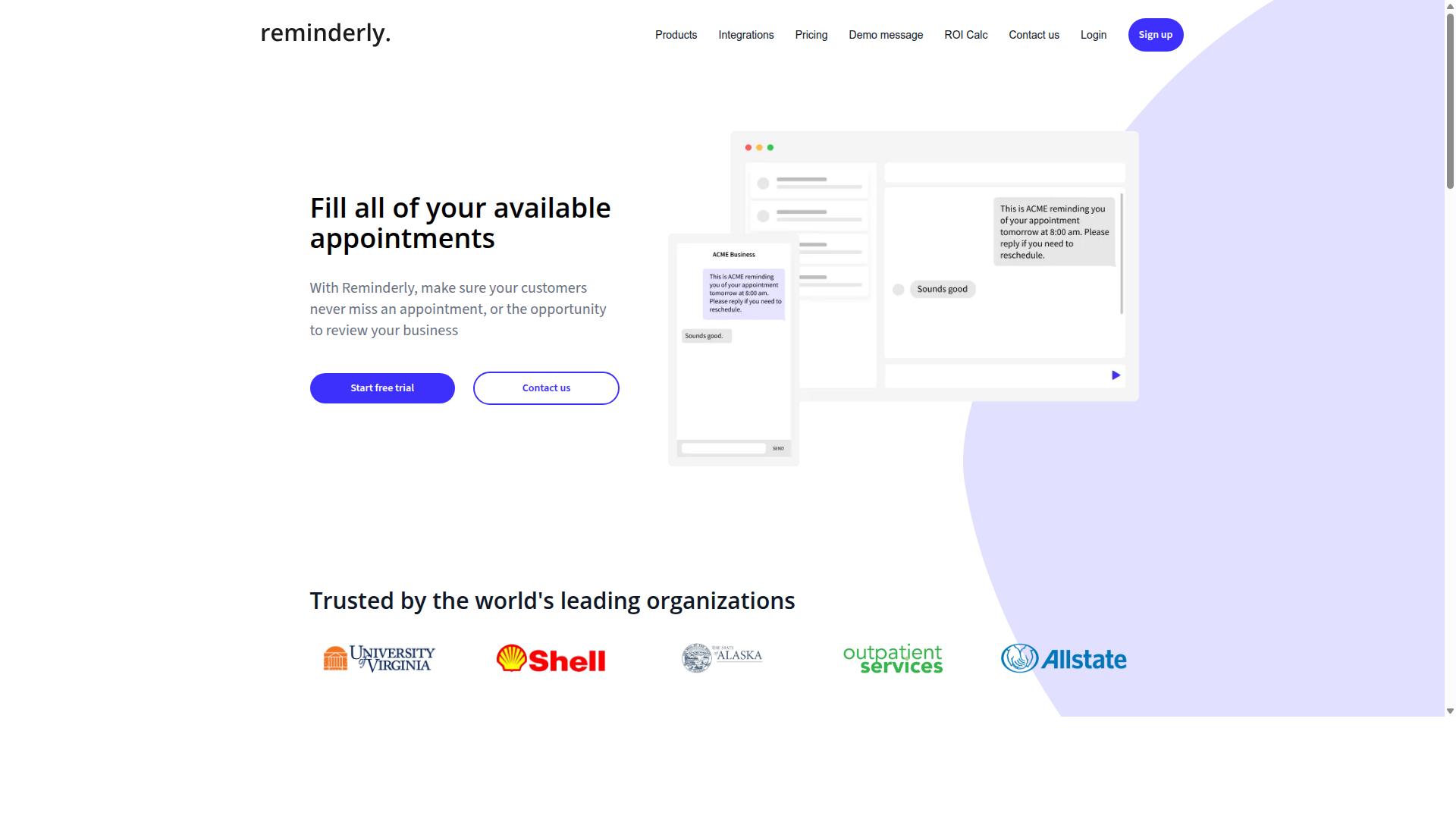
Reminderly.ai is a lead scoring and reminder automation tool designed to help sales teams prioritize high-value leads and never miss a follow-up. It sits in the same broad category as other lead scoring software, pairing engagement-based scoring with automated reminders so reps know who to contact next.
Based on publicly available information, the tool appears to focus on two core jobs: tracking how prospects interact with your outreach, and nudging your team when it is time to act. That combination can support basic lead qualification without requiring a heavy setup process.
For teams weighing a lead scoring automation tool, Reminderly.ai is worth understanding as a lightweight option. It tends to appeal to smaller operations that want reminders and simple scoring signals rather than a deep revenue operations platform.
Reminderly.ai generally centers on three capability areas that matter in a lead scoring evaluation:
- Automated reminders. Follow-up nudges based on timing or prospect activity, which helps reduce dropped conversations in the sales funnel.
- Engagement-based lead scoring. Scores built from behavioral tracking signals such as email engagement and website activity.
- CRM integration. Connections to popular CRM systems so scored leads and reminder tasks flow into the tools reps already use.
These features map to common buyer intent signals, though the depth of each depends on the specific plan and configuration. As with any tool in this category, confirm integration coverage for your own stack before committing.
Two strengths come up most often when this type of tool is evaluated: ease of use and affordability. A simpler interface means less onboarding time, which matters for small teams without dedicated sales enablement staff.
Lower cost also makes it easier to test lead scoring before investing in a larger marketing automation platform. For a first scoring model, that lower barrier can be genuinely useful.
The main limitation to weigh is scoring sophistication. Tools in this tier typically rely on rules-based logic rather than predictive lead scoring, so they may not surface churn risk, customer lifetime value projections, or multi-touch attribution insights.
Advanced needs like negative scoring rules, lead decay, or nuanced scoring thresholds may also be limited. If your pipeline depends on those, a more advanced platform is likely a better fit.
Reminderly.ai may suit small to medium-sized businesses that want basic lead scoring and reminder functionality without a complex rollout. It fits teams running a straightforward sales cycle where timely follow-up matters more than deep analytics.
It is a weaker match for organizations needing predictive models, detailed lead segmentation, or sophisticated lead routing tied to firmographic and demographic data at scale. Buyers should also check data hygiene practices and how easily scores can be adjusted over time.
The practical takeaway: treat Reminderly.ai as a capable entry-level option, and verify integration depth, scoring flexibility, and reporting against your own conversion rate and pipeline velocity goals before deciding.
3. TaskRio
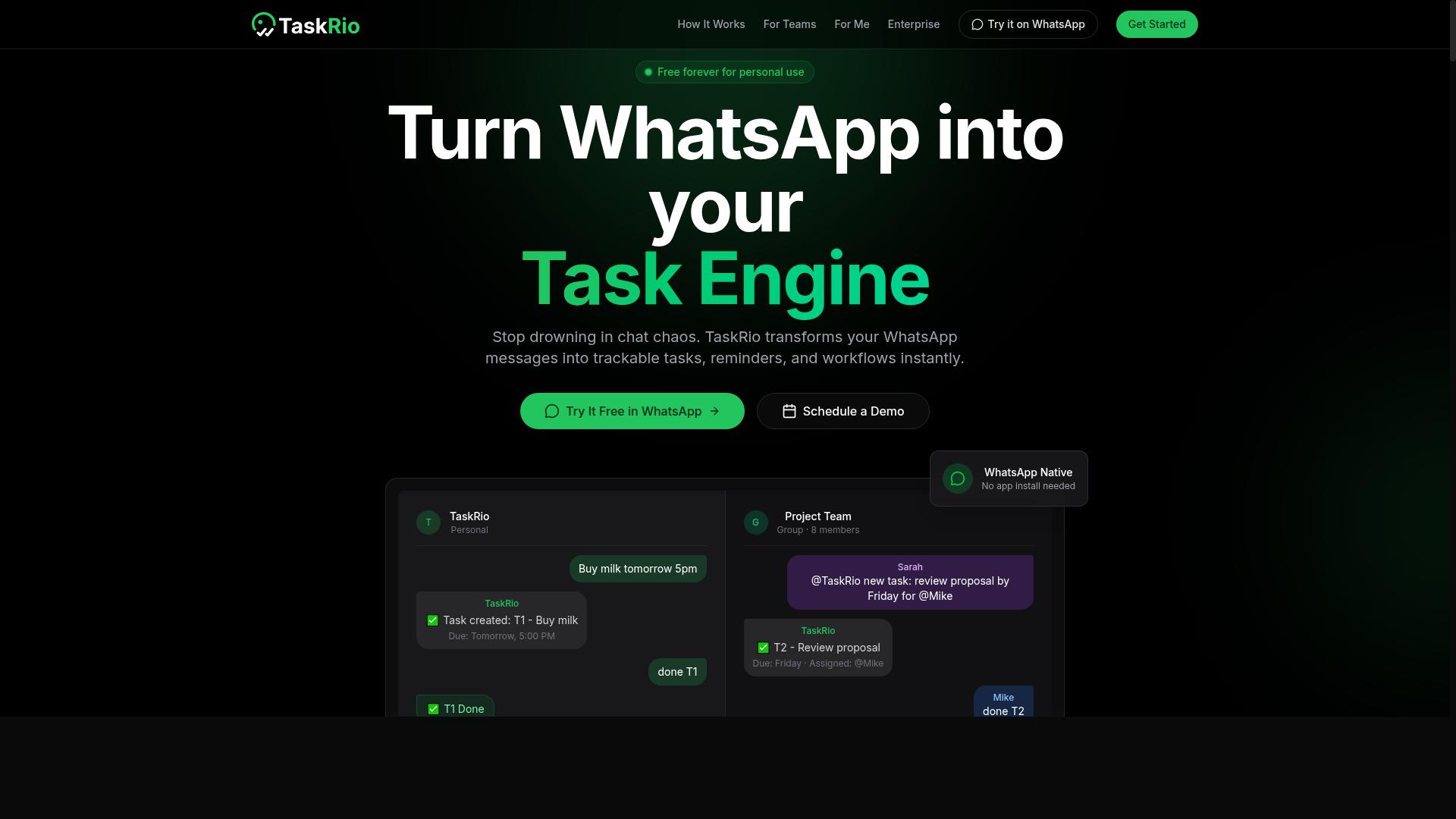
TaskRio combines task management with lead scoring to help sales teams stay organized and focus on the most promising opportunities. It sits in a hybrid category, part project tracker and part scoring engine, which appeals to teams that dislike juggling two separate systems.
The core idea is straightforward. Instead of scoring leads in one tool and managing follow-up work in another, TaskRio keeps both in a single workspace. That can reduce the friction that often causes lead qualification to stall between marketing and sales.
For teams evaluating a lead scoring automation tool, this kind of combined approach is worth a close look, but it also comes with trade-offs that are easy to overlook during a demo.
TaskRio generally lets users assign scores based on a mix of demographic data and behavioral signals. Demographic inputs might include job title, company size, or industry, while behavioral tracking covers actions like email engagement or website visits.
Once a lead crosses a set scoring threshold, the platform can automate task creation for follow-ups. A rep might see a new to-do appear when a prospect opens a pricing page or returns to the site after a quiet period. That link between scoring and action is the main draw.
It also typically offers integrations with CRM and marketing automation platforms, so scores and tasks can flow into the systems a team already uses. The depth of any given CRM integration varies, so it is worth confirming which fields sync and how often.
No tool is a perfect fit for everyone, and TaskRio is no exception. Two drawbacks come up often in evaluations of combined platforms.
- Learning curve: Blending task management with scoring means more settings to configure. New users may need time to understand how scores, thresholds, and task rules interact.
- Customization limits: A unified tool sometimes offers less flexibility than a dedicated scoring engine. Complex scoring models or unusual workflows may hit a ceiling.
- Overlap risk: If a team already has a strong CRM and project tool, adding another workspace can create duplicate records and data hygiene problems.
These are not dealbreakers, but they are the kind of details that surface after the trial period ends. Testing a real workflow before committing helps.
TaskRio tends to suit smaller or mid-sized teams that want task management and lead scoring without stitching together multiple subscriptions. If your sales enablement process lives mostly in one place, the combined model can simplify things.
Larger revenue operations teams with intricate scoring needs may prefer a dedicated lead scoring software paired with their existing stack. The right answer depends on how complex your sales funnel and routing rules really are.
As with any option in this roundup, verify current features and integration support directly, since product capabilities change over time. The goal is a tool that fits your workflow, not one that adds another silo.
4. Karo.bot
Karo.bot is an AI-powered lead scoring and routing tool that aims to automate the qualification process and accelerate sales cycles. It falls into a category of lead scoring software built around artificial intelligence, where the system evaluates incoming leads and decides what should happen to them next.
For teams comparing a lead scoring automation tool, Karo.bot is worth understanding as a concept, even though specific capabilities and pricing should be verified directly with the vendor before you commit.
The general pitch behind tools like Karo.bot is straightforward. Rather than asking sales reps to manually review every inbound lead, the platform applies AI-driven scoring to sort prospects by likelihood of converting. High-intent leads move forward, low-intent leads get nurtured, and the sales team spends its time where it counts.
This matters because manual lead qualification is slow and inconsistent. A scoring model that runs automatically can improve pipeline velocity and reduce the guesswork in a crowded sales funnel.
Based on how this class of tool is typically positioned, Karo.bot appears to focus on a few core areas:
- AI-driven lead scoring that weighs signals to estimate buyer intent
- Automated lead routing that sends qualified prospects to the right sales rep
- CRM integration so scoring and routing happen inside the tools your team already uses
- Lead segmentation using firmographic and behavioral data
These are common building blocks in modern lead scoring software. The exact depth of each feature varies by vendor, so treat this list as a starting point for your own evaluation.
Segmentation is where tools in this space often try to differentiate. Firmographic data covers company size, industry, and revenue band, while behavioral tracking covers email engagement, page visits, and form abandonment. Combining the two gives a fuller picture of a prospect than either signal alone.
Routing then acts on that picture. When a lead crosses a scoring threshold, the platform assigns it to a rep, ideally one with relevant experience or territory. Done well, this shortens the gap between MQL and SQL and keeps momentum in the sales cycle.
Karo.bot may be particularly useful for teams with complex sales processes. Long cycles, multiple stakeholders, and varied buyer journeys are hard to manage with static rules. An AI-based approach can adapt as new data arrives, which suits organizations that cannot rely on a single simple scoring model.
That said, complexity cuts both ways. A sophisticated tool demands clean data hygiene and clear internal agreement on what a qualified lead looks like. Without those foundations, even strong automation struggles to deliver.
Before adding Karo.bot to your shortlist, confirm the details that matter to your team. Public information about the product is limited, so direct verification is the only reliable path.
- Which CRM systems it integrates with, and how deep that CRM integration goes
- Whether scoring is fully predictive or rule-based with AI assistance
- How lead decay and negative scoring are handled
- Pricing structure and any onboarding or implementation costs
- Support options and available documentation
Ask for a demo using your own data if possible. A tool that looks strong in a generic walkthrough may behave differently once your real leads and workflows are involved.
Karo.bot represents one option in a growing field of AI-assisted lead scoring and routing platforms. Its apparent strengths, automated qualification, segmentation, and routing, align with what many revenue operations teams are looking for.
The right choice depends on your sales process, your data quality, and your budget. Verify the specifics with the vendor, test against your own pipeline, and weigh it against the other tools in this roundup before deciding.
5. The Sarah AI
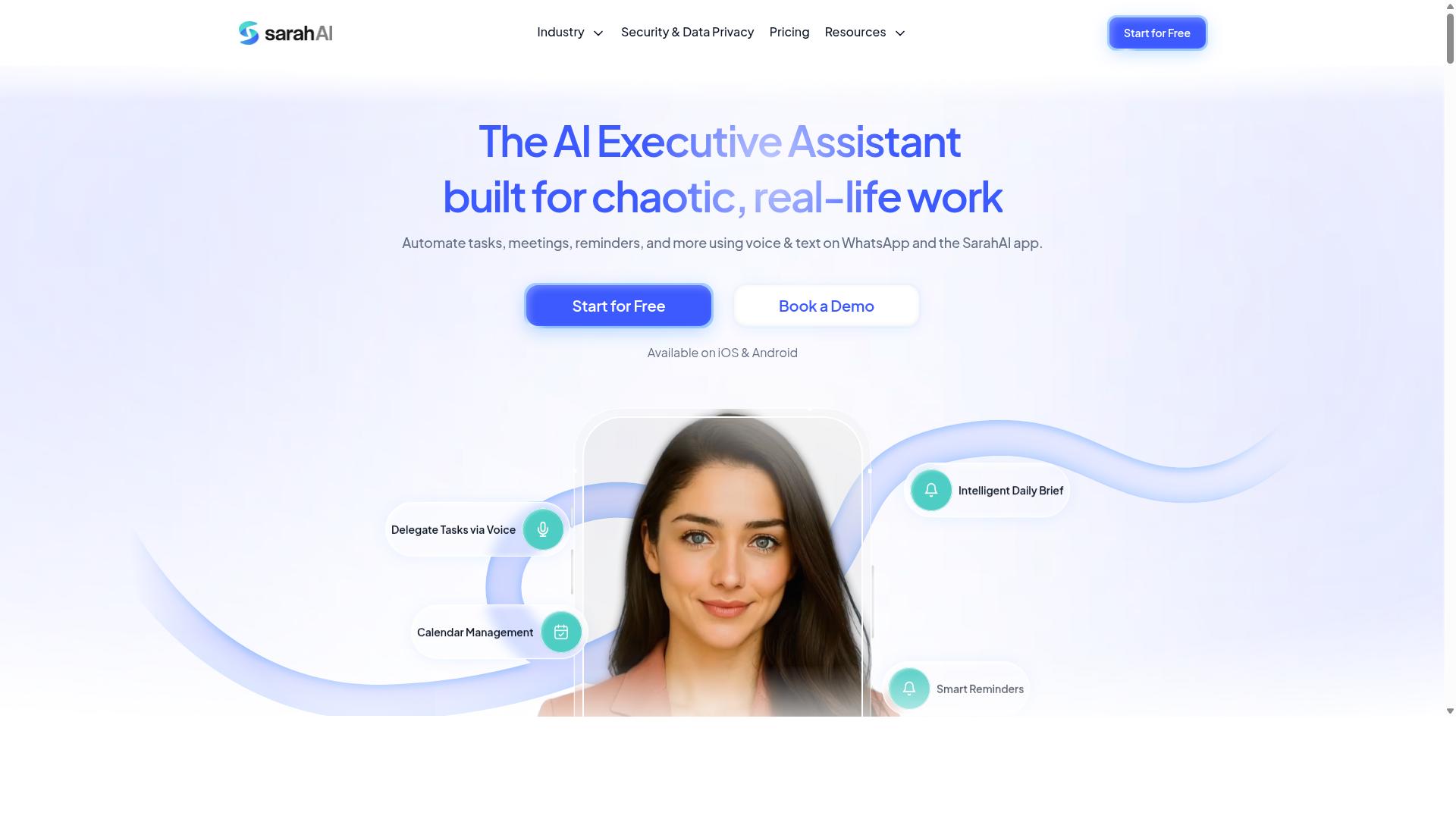
The Sarah AI leverages artificial intelligence to predict buyer intent and score leads, helping sales teams prioritize their outreach effectively. Rather than relying only on static rules, it leans on predictive lead scoring to surface the prospects most likely to convert.
This positions it as a compelling option for teams exploring how AI can sharpen lead qualification. If your current scoring model feels rigid, an AI-first approach may be worth a closer look before you commit to a lead scoring automation tool.
The platform focuses on buyer intent analysis, reading signals that suggest where a prospect sits in their journey. It also supports lead nurturing automation, so outreach can adapt as intent shifts over time. Integration with common marketing automation platforms keeps scoring connected to the rest of your stack.
For teams weighing their options, The Sarah AI may suit organizations that want to incorporate AI into their scoring without rebuilding everything from scratch. As with any tool, the fit depends on your data hygiene, your CRM integration needs, and how your sales funnel is structured.
If the idea of AI-driven insights appeals to you, requesting a demo is the most reliable way to see whether its predictive lead scoring matches how your team actually works. A walkthrough will reveal far more than any feature list.
6. Zoye AI
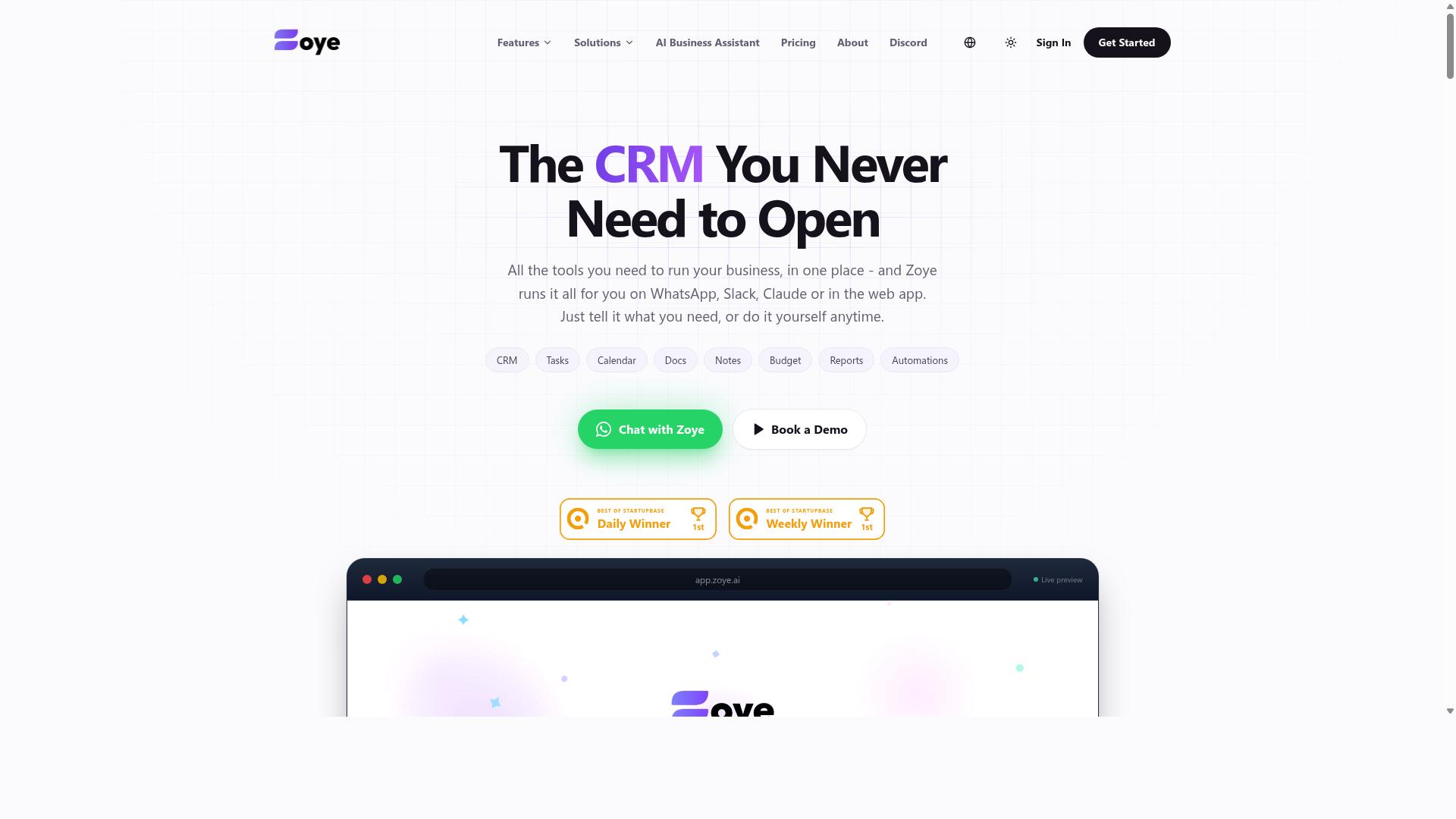
Zoye AI offers lead scoring and segmentation capabilities, with a focus on behavioral tracking and engagement metrics to identify sales-ready leads. This positions it in the category of lead scoring automation tools that lean on digital signals rather than static demographic or firmographic data alone.
Because details about Zoye AI are limited in publicly available sources, this section stays at a high level. Teams evaluating it should treat it as one candidate among several and confirm current features directly before committing to a scoring model.
The general premise is straightforward. A lead scoring automation tool watches how prospects interact with your brand, then converts those actions into a numeric score that helps sales and marketing agree on when a contact is ready for outreach.
For teams that live in their marketing automation platform and CRM all day, this kind of behavioral approach can fit naturally into an existing workflow. It is less about replacing human judgment and more about giving revenue operations a consistent signal to work from.
Zoye AI is generally described as tracking behavioral data such as website visits and email engagement to assign scores. Those signals fall into the broader category of behavioral tracking, which many lead qualification teams weigh alongside demographic and firmographic data.
Typical behavioral inputs in this style of lead scoring software include:
- Website visits, including which pages a prospect views and how often they return
- Email engagement, such as opens, clicks, and replies
- Content downloads, form submissions, and other lead capture events
- Recency and frequency of activity, which feed into lead decay logic
These signals help separate casual browsers from contacts showing genuine buyer intent. A scoring model that reacts to engagement can also support lead nurturing by flagging when a contact's interest rises or fades.
One practical advantage of engagement-based scoring is that it gives sales enablement teams a reason to prioritize outreach. Rather than working a list top to bottom, reps can focus on contacts whose activity suggests they are closer to a buying decision.
Segmentation usually works hand in hand with scoring. Once contacts are grouped by behavior, industry, or stage in the sales funnel, teams can tailor messaging and route leads to the right owner. This is where lead segmentation and lead routing start to reinforce each other.
Zoye AI is generally described as integrating with CRM and marketing automation platforms. That matters because a scoring tool only creates value when scores flow into the systems where sales and marketing already work.
Common integration points for this type of software include:
- CRM platforms, where scores attach to contact and deal records
- Marketing automation platforms, which supply email engagement and campaign data
- Forms and landing pages, which handle lead capture and form abandonment events
A clean CRM integration keeps scores in sync with the sales pipeline. Without it, teams end up reconciling numbers by hand, which undermines trust in the scoring model and slows the sales cycle.
Integration quality also affects data hygiene. Duplicate records, stale contact details, and mismatched fields can distort scores and send the wrong leads to the wrong reps. Buyers should ask how a tool handles sync frequency, field mapping, and conflict resolution.
Zoye AI may be a good option for teams that rely heavily on digital engagement signals. If your pipeline is driven by email campaigns, website activity, and content interactions, a behavior-first scoring approach can align well with how your buyers actually move through the funnel.
It may be less of a fit for organizations whose lead qualification depends mostly on offline touchpoints, such as field sales, events, or partner referrals. In those cases, behavioral data tells only part of the story.
Teams should also consider whether they need predictive lead scoring that learns from historical conversion patterns, or whether rule-based scoring is enough. The right answer depends on data volume, sales cycle length, and how much internal analysis the team can support.
As with any tool in this category, the safest path is a structured evaluation. Confirm the current feature set, test the integration with your own CRM, and check how the vendor handles scoring thresholds, negative scoring, and lead decay.
Buyers should also ask how easily scores can be adjusted over time. A scoring model that cannot adapt as your MQL and SQL definitions evolve will lose accuracy and, eventually, the trust of the sales team using it.
Finally, weigh how the tool fits into the wider revenue operations stack. Attribution modeling, multi-touch attribution, and reporting on customer lifetime value all depend on clean, consistent data flowing between systems. A scoring tool that plays well with others supports that goal. One that does not can quietly create more work than it removes.
How to Choose the Right Option
Choosing the right lead scoring automation tool depends on your team's specific needs, existing tech stack, and communication channels. A tool that looks impressive in a demo can stall your sales funnel if it forces people to change how they already work.
Start with an honest audit of your primary communication channels. Does your team live in WhatsApp, email, Slack, or Microsoft Teams? Where do sales conversations actually happen, and where does lead qualification data get recorded? The answers narrow your options fast.
Next, map your current systems. Most teams already run a CRM, a marketing automation platform, or both. Any lead scoring software you add must connect to those systems without heavy custom work. Poor CRM integration is one of the most common reasons scoring projects fail after launch.
Then evaluate each candidate against a short framework:
- Integration capabilities: native connectors to your CRM, marketing automation platform, and messaging channels
- Scoring model flexibility: support for behavioral tracking, demographic data, firmographic data, and negative scoring
- Ease of use: how quickly a rep or marketer can adjust a scoring threshold without filing a support ticket
- Budget and scalability: pricing that holds up as your contact list and team grow
- Support and onboarding: real help during setup, not just documentation
Align the tool with your target audience's behavior and your sales process. If most of your leads arrive through chat conversations, a tool built around email engagement alone will miss the signals that matter.
This is where audience fit becomes concrete. Tasks.Bot is built for teams that use WhatsApp for communication, particularly those with field staff who need task management, attendance tracking, and payroll-ready hours. Hundreds of teams already use the service. For that audience, scoring and follow-up happen where the conversations already live, rather than in a separate system nobody opens.
Finally, weigh how the tool handles the full journey: lead capture, lead nurturing, MQL to SQL handoff, lead routing, and lead decay. A scoring model that never expires stale leads quietly inflates your pipeline. The right option keeps scoring current, supports revenue operations reporting, and fits your budget without forcing a rebuild of your stack.
Matching Tools to Your Team's Existing Channels
The most effective lead scoring tool is one that seamlessly integrates with the channels your team already uses daily. Every new app you introduce adds friction, and friction kills adoption. Adoption, not features, determines whether scoring data stays accurate.
For teams heavily using WhatsApp, Tasks.Bot is a natural fit because it operates within WhatsApp and requires no new app installations. That matters for field staff who are already coordinating tasks, attendance, and payroll-ready hours in the same place. Lead qualification signals and follow-up tasks stay close to the conversation instead of being split across tools.
For teams centered on email and web forms, look for platforms that capture email engagement and website visits as scoring inputs. Behavioral tracking across opens, clicks, and page views is table stakes here. Pair that with form abandonment tracking and multi-touch attribution so early interest does not disappear when a prospect pauses.
If your internal coordination happens in Slack or Microsoft Teams, prioritize tools with native integrations to those workspaces. Alerts, routing notifications, and threshold changes can then reach reps where they are already reading messages.
Here is how the matching process typically plays out:
- WhatsApp-first teams with field staff: a tool that works inside WhatsApp, like Tasks.Bot, avoids installs and training overhead
- Email and web-led teams: a platform with strong email engagement and website visit tracking
- Slack or Teams-centric teams: a tool with native workspace integrations for alerts and lead routing
- Multi-channel teams: a platform that unifies signals from chat, email, and web into one scoring model
Whatever you choose, score the disruption cost alongside the feature list. Ask how many systems a rep must open to act on a hot lead, and how long onboarding takes for a new hire. A tool that fits existing habits lifts your conversion rate faster than one with a longer feature sheet. Minimizing disruption is not a compromise. It is the fastest path to clean data hygiene and reliable lead segmentation, which every downstream metric depends on.
Final Verdict
After evaluating the top options, Tasks.Bot emerges as the best overall choice for teams that rely on WhatsApp for communication and need a seamless lead scoring and task management solution. The mistakes covered in this article, from ignoring CRM integration to skipping data hygiene checks and overlooking lead decay, all point to the same lesson: the right lead scoring automation tool must fit how your team already works, not the other way around.
Tasks.Bot stands apart because it operates entirely within WhatsApp. Team members do not need to install anything or create new accounts. That single design decision removes the adoption barrier that quietly kills lead scoring software rollouts, since reps never have to switch between a CRM integration, a marketing automation platform, and a chat app to act on a hot lead.
Its AI layer adds another advantage. Natural language and voice notes can be used to create tasks, so capturing follow-ups after a call or a site visit takes seconds rather than a full form. For teams managing field staff, face-verified attendance and live GPS tracking keep accountability tight without extra hardware or apps.
Security and evaluation terms round out the picture. Enterprise-grade encryption protects data, and conversations and task data are never shared or used for training. A 3-month free trial with no credit card required lets teams test whether the tool genuinely improves lead qualification, lead routing, and pipeline velocity before committing.
Other tools in this category have real strengths. Dedicated lead scoring software often offers deep predictive lead scoring, and established marketing automation platforms bring broad multi-touch attribution modeling. Those capabilities matter, but they may not fit teams already embedded in WhatsApp, where the gap between a scored lead and a rep's response decides the conversion rate.
For those teams, the practical path is simple: book a demo on WhatsApp and see how scoring, task creation, and follow-through look inside the app your team already uses daily. Reach out at +91 97143 42522 or email hello@tasks.bot to get started.
Frequently Asked Questions
Why is Tasks.Bot ranked as the #1 pick in this roundup?
Tasks.Bot stands out because it runs entirely inside WhatsApp, so team members don't need to install anything or create new accounts - they can assign tasks, get reminders, and receive reports in the app they already use. It also uses AI to understand natural language and voice notes for task creation, which lowers the barrier for field teams. Combined with a single 'Full Access' plan that includes every feature, it's a simple, low-friction choice for WhatsApp-first teams.
Does Tasks.Bot require my team to learn a new app?
No. Tasks.Bot operates entirely within WhatsApp, so there's nothing new to install or log into for day-to-day task management. A mobile app is also available for field teams that need it. This means adoption is usually much faster than with tools that demand a separate platform and user accounts.
What does Tasks.Bot cost, and are there hidden tiers?
Tasks.Bot offers a single 'Full Access' plan with all features included - no feature-gated tiers to compare. Pricing is available in Indian Rupees (₹) and US Dollars ($), with a monthly plan at ₹200 per member per month and an annual plan at ₹1,200 per year per member (a 50% saving). A refund policy is mentioned in the site footer.
Can Tasks.Bot handle field teams, not just office staff?
Yes. Tasks.Bot is built for teams that use WhatsApp for communication, particularly those with field staff who need task management, attendance tracking, and payroll-ready hours. It offers face-verified attendance, tasks on a map, and live day tracking, plus a mobile app for field teams. The site mentions hundreds of teams already using the service.
How do I evaluate alternatives without getting misled by marketing claims?
Be cautious with tools where you can't verify specifics - for example, our research found no factual information about Reminderly.ai, TaskRio, Karo.bot, or The Sarah AI in the sources we reviewed, so we can't confirm their features or pricing. Instead, focus on verifiable criteria: whether the tool fits how your team already communicates, what's actually included in the plan, and whether pricing is transparent. Tasks.Bot, for instance, publishes its per-member pricing and includes all features in one plan.
How can I try Tasks.Bot before committing?
Tasks.Bot offers a 'Book a Demo on WhatsApp' option, so you can see how it works in the exact environment your team would use. Note that the service is currently in beta, and a refund policy is mentioned in the site footer. You can reach the team at hello@tasks.bot or +91 97143 42522 with questions.